The first quarter of 2018 marked a key moment in quantum computing, characterized by bold hardware announcements, the launch of post-quantum cryptography standardization, and growing national commitments worldwide. Industry leaders pushed qubit counts higher while researchers reported breakthroughs in materials, cooling, and entanglement. Although fully fault-tolerant, utility-scale systems remained years away, the quarter’s developments signaled quantum technologies were in the offing. Moving from laboratories to strategic priority, with clear implications for computing power, cybersecurity, and global competitiveness, Q1 2018 gave quantum computing firmer ground.
Hardware Milestones Raise Expectations
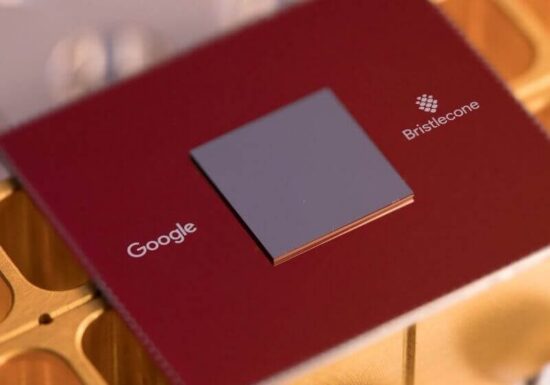
Google introduced its 72-qubit Bristlecone processor, designed to achieve quantum supremacy and to demonstrate performance beyond classical simulation. Intel advanced silicon-based spin qubits with its 49-qubit Tangle Lake chip, emphasizing manufacturability advantages over competing approaches. Meanwhile, Alibaba placed an 11-qubit superconducting system on its public cloud, expanding experimental access for developers and enterprises. Collectively, these announcements highlighted a broadening hardware environment and intensified competition among superconducting, silicon-spin, and trapped-ion platforms.
Post-Quantum Cryptography Standardization Begins
NIST opened its first round of submissions for post-quantum cryptographic algorithms, receiving dozens of candidate schemes resistant to quantum attacks. Security vendors responded quickly: ISARA released an updated Radiate quantum-safe toolkit offering immediate migration paths for enterprises. Discussions of “harvest now, decrypt later” threats gained prominence. The urgency for organizations to begin transition planning even while quantum computers capable of breaking RSA remained distant became a strategic imperative.
National Strategies and Funding Surge
Governments accelerated investment and coordination. Canada committed C$15 million to the Institute for Quantum Computing at Waterloo, while the University of Chicago received a $10 million NSF expedition grant for practical quantum advantage. New South Wales supported a quantum academy initiative in Sydney, and India and China continued aggressive programs amid warnings of a global quantum race. The U.S. Department of Energy formally entered the field after years of limited involvement, signaling broader federal recognition of quantum’s strategic value.
Quantum Communication and Networking Progress
Researchers demonstrated new techniques for entanglement distribution and photon manipulation, including intercontinental quantum key distribution via the Micius satellite and advances in topological materials for robust quantum states. Progress in cooling quantum devices through interference methods and hole-punched photonic crystals offered pathways toward more stable, longer-coherence systems. These results strengthened the foundation for future quantum networks and secure communication infrastructure.
Software Ecosystems and Enterprise Engagement Expand
Microsoft extended its Quantum Development Kit to macOS and Linux, lowering barriers for algorithm research. Daimler partnered with Google to explore quantum applications in chemistry and optimization, while Baidu launched its own quantum computing institute. Theoretical debates—such as Gil Kalai’s continued skepticism about scalable quantum computation—coexisted with practical tool-building, illustrating a community simultaneously cautious and ambitious.
Q1 2018 revealed a field in transition: hardware qubit counts climbed rapidly, post-quantum preparedness became a mainstream concern, and governments worldwide took note and began committing fiscal resources. The quarter laid groundwork for the coming decade, making clear strategic readiness in talent, infrastructure, and security, would determine which nations and organizations capture the potential of quantum technologies.