
Tag: United Kingdom

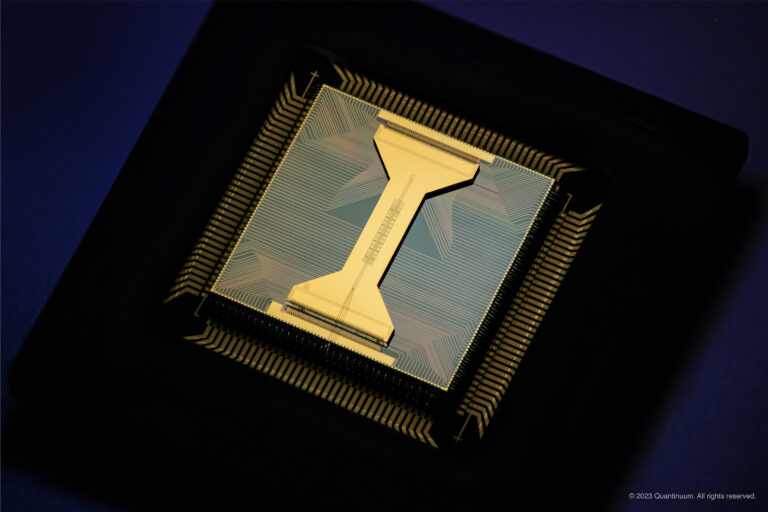
Quantinuum H-1 Chip

Quantinuum, Rolls-Royce, Riverlane and EPCC Sign Multi-Year Agreement to Explore Fault-Tolerant Quantum Computing for Gas Turbine Fluid Dynamics Simulations

On July 14, 2026, Quantinuum, Rolls-Royce, Riverlane and EPCC announced a multi-year agreement to explore quantum computing capabilities for industrial workflows, specifically complex fluid dynamics simulations in gas turbine design. Quantinuum will provide access to its Helios quantum computer, while Rolls-Royce contributes design expertise, Riverlane offers quantum error correction knowledge, and EPCC delivers supercomputing integration. The project seeks to combine fault-tolerant quantum systems with classical supercomputers to address computational challenges in high-fidelity modeling. Their collaboration builds on previous work and supports the UK’s goal of accessible teraQuOp-scale quantum systems for practical industrial applications.

Read More »
Encryption Risk Roadmap

Quantum Computing Weekly Round-Up: Week Ending June 20, 2026​​

The quantum sector accelerated from research to real deployments and policy mandates in mid-June 2026. The UK and Japan sealed a $24 billion partnership while the US and France advanced legislation and sovereign quantum infrastructure. Hardware from IQM reached Oak Ridge National Laboratory and photonic systems arrived in Japan, with PsiQuantum starting construction on a utility-scale system in Australia. Researchers achieved passive error correction at the break-even point and companies launched scalable post-quantum security platforms. Enterprises such as Rolls-Royce and Cleveland Clinic are integrating quantum tools into industrial and medical workflows, signaling a shift to procurement.

Read More »

DuoKey Launches Quantum Risk Score to Prioritize Enterprise Post-Quantum Cryptography Migration

DuoKey SA has introduced the Quantum Risk Score, a free and auditable tool that provides organizations with a 0-100 composite score of their cryptographic exposure to quantum threats based solely on publicly observable signals. The assessment generates a board-ready report featuring a complete cryptographic inventory, a prioritized migration matrix, regulatory gap analysis across major frameworks including NIST and CNSA 2.0, and a 36-month migration roadmap. This launch at VivaTech Paris comes as enterprises face tightening timelines for post-quantum cryptography adoption, with the NSA CNSA 2.0 mandate approaching in 2027 and NIST planning to deprecate RSA-2048 and ECDSA by 2030. The solution requires no internal credentials or system access, making it an accessible first step for leadership teams seeking to understand and address their quantum readiness.

Read More »
UK and Canda Flags

Quantum Computing Weekly Round-Up: Week Ending June 6, 2026

This Quantum Computing Weekly Round-Up captures a week where capital kept flowing, hardware roadmaps gained concrete targets, and security moved from theory to deployed roots of trust. The quantum ecosystem showed it is no longer just promising the future; it is installing the plumbing for it right now. Readers who skip the details below will quickly feel out of step with where budgets, partnerships, and policy are heading.

Read More »

Haiqu Launches Agentic Quantum Operating System to Accelerate Enterprise Quantum R&D

Haiqu has introduced its Agentic Quantum Operating System (HaiquOS), a full-stack quantum intelligence platform that combines agentic AI with proprietary middleware. The solution helps R&D teams identify suitable problems, design experiments, and interpret results from today’s noisy quantum hardware with minimal custom engineering. Internal benchmarks show dramatic efficiency gains, including a molecular dynamics simulation reduced from over nine hours and $30,000 to roughly 30 seconds and $25. HaiquOS is already gaining interest from organizations including Capgemini and Deloitte.

Read More »

Quantum Computing Digest — 2020

2020 reflected a year of consolidation and readiness rather than breakthrough scale. Cloud platforms widened access, governments committed long-term funding, and enterprises began treating quantum risk and opportunity as programmatic concerns. While fault-tolerant systems remained distant, the ecosystem strengthened its technical, policy, and security foundations.

Read More »
Financial Protection

Quantum Computing Weekly Round-Up: Week Ending February 7, 2026

This week’s quantum developments crossed from planning into validation. Q-CTRL demonstrated a commercially validated quantum navigation system operating without GPS, while Infleqtion reported 99.93% reliable qubit measurements pointing toward scalable architectures. Governments advanced from funding to coordination, with Canada accelerating its national strategy and Europe backing superconducting chip manufacturing through the SUPREME consortium. Post-quantum cryptography moved deeper into policy as Europol and Asian governments outlined migration priorities.

Read More »

Quantum Computing Weekly Round-Up: Week Ending January 24, 2026​

PQC is moving from roadmap to real procurement signals. This week brought certifications, enterprise partnerships, and manufacturing ambitions, plus hardware consolidation and new developer tools. QKD engineering realities and headline research kept the pressure on. If you skipped the links, you missed the week. Check out what you may or may not have missed!

Read More »
nodeQ Logo featuring black rectangle embracing company name.

nodeQ Quantum Networking Intelligence for Secure and Quantum-Safe Infrastructure

nodeQ is a UK-based quantum technology startup focused on software infrastructure for quantum and hybrid classical–quantum networks. Founded by quantum communications expert Stefano Pirandola, the company provides tools helping organizations assess existing architectures and plan cost-efficient transitions to quantum-safe systems. Its platforms support network simulation, risk analysis, and secure communications aligned with emerging post-quantum security requirements. nodeQ pulls together quantum networking, cybersecurity, and long-term infrastructure planning.

Read More »
US v UK Flags

1776 Reimagined: The Quantum Revolution of 2025

The quantum revolution — pitting the US vs UK — is heating up in 2025. The US dominates with investment and scale, but the UK holds its own with smart innovation and regulatory savvy. From talent pools to chip design, both nations bring unique strengths to the field. It’s not a 1776-style rout—none-the-less, it’s another fight with global impact.

Read More »

Get The Qubit Report delivered straight to your inbox.

Sign up to receive our newsletter and other reports.

We keep your data private and share your data only with third parties that make this service possible. Read our privacy policy for more info.