
How SOHO Users Can Address HNDL Without Extra Quantum Spending
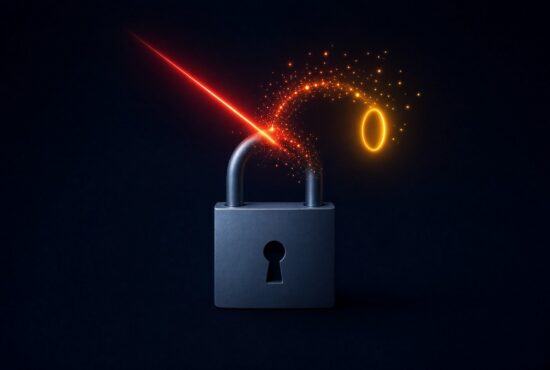
The looming prospect of quantum computers capable of breaking widely used encryption has focused most public and policy attention on large enterprises and national systems. While quantum “harvest now, decrypt later” (HNDL) threats have drawn attention in discussions of cybersecurity for Small Office/Home Office (SOHO) environments and small businesses, the realistic risk for most such organizations remains substantially lower than for major enterprises or national systems. For the typical SOHO user, the most practical response is not specialized quantum defenses but continued reliance on modern, vendor-managed services already incorporating stronger cryptographic protections.
The HNDL Threat Model in Brief
A cryptographically relevant quantum computer (CRQC) does not exist today and is not expected for years (estimates commonly put meaningful risk in the 2030s, with wide uncertainty). Shor’s algorithm would break widely used public-key systems such as RSA and elliptic-curve Diffie-Hellman (ECDH/ECC) protecting key exchange and many signatures.
HNDL is the strategy of collecting encrypted traffic or ciphertext now, storing it cheaply, and decrypting it later once a CRQC is available. Government agencies (NIST, CISA, NSA, NCSC, Europol, and others) have treated this as a present concern justifying migration planning, even though limited public evidence exists of specific named campaigns collecting data solely for future quantum decryption.
SOHO / Small-Business Risk Profile
Typical SOHO environments are not the primary targets of the nation-state actors best positioned to run large-scale, long-term collection and storage operations. HNDL requires significant resources to intercept, store, and retain large volumes of ciphertext for a decade or more. This investment profile favors high-value, long-lived targets (intelligence, critical infrastructure, certain defense supply-chain, pharmaceutical, or major financial data).
Most SOHO data travels over cloud-provider infrastructure (Microsoft 365, Google Workspace, AWS, common SaaS CRMs, etc.). Emails, files in Drive/SharePoint, and routine business records are generally not viewed as credible HNDL targets for intelligence services. One assessment notes a 50-person logistics company’s invoicing data does not match the investment profile of such operations, while a medical practice with decades-long patient records or a law firm with privileged correspondence may face a different calculation if the data must remain confidential into the mid-2030s or beyond.
Europol’s 2026 report on the topic rates the risk high for governments, medium-to-high for companies, and low-to-medium for citizens, and emphasizes high-value information with lasting sensitivity is the most plausible target. Short-lived or low-value data has effectively negligible HNDL exposure.
Data in Transit
This is the classic HNDL vector. An adversary who can tap a link or position themselves to capture TLS, VPN, or similar sessions protected by classical key exchange can store the ciphertext. Once the public-key material can be broken, the session keys fall and the content becomes readable.
Mitigations are already rolling out:
- Major browsers (Chrome 131+, Edge 131+, Firefox 132+ desktop, Safari on recent Apple OS versions) negotiate the hybrid post-quantum key-agreement group X25519MLKEM768 (ML-KEM-768 combined with classical X25519) by default in TLS 1.3.
- Cloudflare and others have deployed hybrid key agreement widely on the edge and are extending it toward origins. Significant shares of human-generated HTTPS traffic already use hybrid protection.
- TLS 1.3 with forward secrecy (and hybrid key exchange) is preferable to older TLS or non-forward-secret configurations.
For a typical SOHO user, the practical step is keeping operating systems, browsers, and client software updated so hybrid key exchange is used where the other end supports it. Self-managed VPNs or on-premises appliances still relying solely on classical key exchange are higher-priority items to check for firmware updates adding hybrid or post-quantum options.
Data at Rest
Symmetric encryption such as AES-256 is considered resistant for the foreseeable future. Grover’s algorithm provides only a quadratic speedup, so AES-256 retains a large security margin. The more relevant quantum exposure for data at rest arises if the keys protecting the data (or the key-wrapping layer) rely on vulnerable public-key cryptography, or if long-lived archives were protected under classical key exchange later captured.
Cloud providers managing encryption at rest for customer data are actively working on post-quantum key management and wrapping. Local full-disk encryption on a well-managed machine, protected by a strong passphrase and modern key derivation, is not the primary HNDL concern for most SOHO users. The bigger practical risks remain classical threats (ransomware, credential theft, unpatched systems, phishing).
What a SOHO Environment Can Do
- Assess longevity of sensitivity — Identify any data needing to remain confidential for 10+ years (certain medical, legal, financial, or proprietary records). Routine operational data with shorter confidentiality needs is far less concerning.
- Rely on and pressure major vendors — Prefer cloud and SaaS providers with published post-quantum roadmaps. Microsoft, Google, AWS, Cloudflare, and others are already deploying hybrid key agreement and planning broader transitions. Ask critical suppliers about their timelines; for most SOHO users the cryptographic migration is largely the vendor’s job.
- Use current best-practice cryptography — Prefer TLS 1.3, keep clients and servers updated so hybrid ML-KEM key agreement is negotiated when available, and enable forward secrecy. Disable obsolete protocols (TLS 1.0/1.1, weak ciphers).
- Apply ordinary strong hygiene — Multi-factor authentication, timely patching, least-privilege access, data minimization, and reasonable retention limits reduce the amount of high-value material available for harvesting in the first place. These controls also address the much larger current risks.
- For any self-managed systems — Inventory VPN appliances, self-hosted services, or custom applications. Prioritize those handling long-lived sensitive data for vendor updates adding hybrid post-quantum key exchange (e.g., support for RFC hybrid mechanisms). Avoid rolling your own cryptography.
- Avoid unnecessary expense — Quantum key distribution (QKD) hardware, custom post-quantum implementations, or specialized consultancies are not justified for the great majority of SOHO environments. The ecosystem transition to NIST-standardized algorithms (ML-KEM for key encapsulation, ML-DSA and others for signatures) is the relevant path.
In short, HNDL is a recognized concern driving real standards and deployment activity, and it is worth understanding for any organization holding long-lived sensitive data. For a typical SOHO, the residual risk is modest relative to everyday threats. Most of the protective migration is occurring in the cloud and software stacks already in use. Your highest-leverage actions are keeping systems current, using reputable providers, and limiting the lifetime and exposure of truly sensitive records.
—
Find more articles and reports at The Qubit Report.
Related Articles
Quantum Computing Weekly Round-Up: Week Ending October 17, 2026
IonQ locked in up to $1.3 billion for Elisity and priced a $2 billion equity offering while Orca Computing switched on a room-temperature photonic system
The Qubit Report: October 15, 2026
Google Quantum AI cut magic-state errors fortyfold on Willow while D-Wave delivered Italy’s first annealing system to Como. The same day brought PQC migration timelines
ORCA Computing Launches PT-3, the First Quantum Computer Built for Commercial Quantum Advantage
ORCA Computing launches the PT-3, the first photonic quantum computer built for commercial quantum advantage. The system operates with NVIDIA-accelerated computing at the Digital Realty