
Author: The Qubit Report Staff

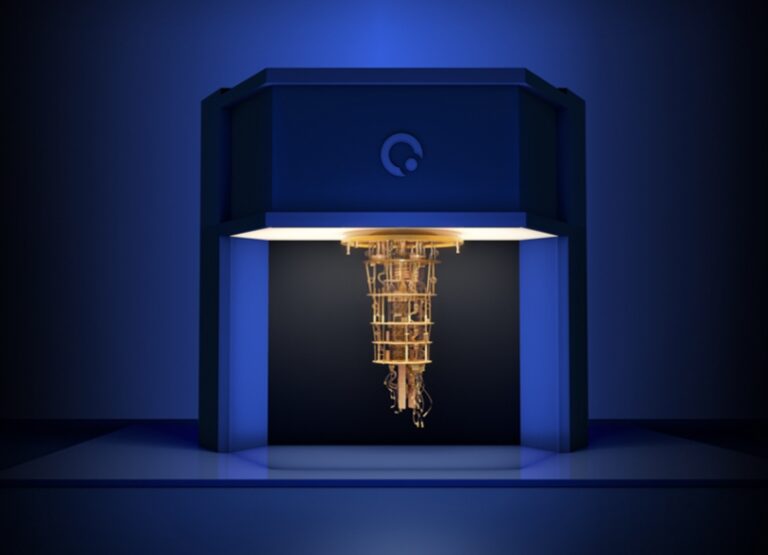
Quantinuum H-1 Chip

SoftBank and Quantinuum White Paper Flags Telecom Fraud Detection as Early Quantum TDA Opportunity

SoftBank Corp. and Quantinuum released Quantum Computing Frontiers in July 2026, mapping quantum chemistry and topological data analysis against Quantinuum’s hardware roadmap. The paper highlights telecommunications fraud detection, specifically International Revenue Share Fraud, as a potentially nearer-term commercial opportunity than chemistry applications. Experiments on the BUPT dataset showed that normalized Laplacian moments improved macro recall and F1 when added to graph neural networks. The authors frame a hybrid quantum–HPC–AI workflow aligned to successive Quantinuum system generations.

Read More »

Quantum Computing Weekly Round-Up: Week Ending August 1, 2026

Quantum Computing Weekly Round-Up for the week ending August 1, 2026 delivered hard proof that quantum signals can share live commercial fiber, silicon processors can run their own error correction, and real capital plus telco deals are turning roadmaps into working infrastructure. Northwestern pushed entangled photons 15 miles through Chicago traffic at 94 percent fidelity. ZuriQ raised $25.5 million for its 2D trapped-ion architecture while HRL showed an 18-qubit silicon chip controlling itself inside the cryostat. AT&T expanded its D-Wave footprint and post-quantum authentication reached origin servers. Readers who skip the links will feel the FOMO.

Read More »

EPFL Partners with Quantinuum for First Swiss Academic Cloud Access to Trapped-Ion Quantum Computers via SCITAS Platform

EPFL has become the first Swiss academic institution to offer researchers cloud access to advanced quantum computers. The initiative, developed by the Center for Quantum Science and Engineering and SCITAS in partnership with Quantinuum, embeds trapped-ion hardware access directly into the university’s high-performance computing environment. Scientists can now test quantum algorithms and perform digital simulations on systems noted for high fidelity and low decoherence. Plans also include extending hands-on access to master’s students in quantum science and engineering.

Read More »

ZuriQ Raises $25.5M Seed Round Led by Quantonation to Scale Native 2D Trapped-Ion Quantum Architecture

ZuriQ, the ETH Zürich spin-out developing native two-dimensional trapped-ion processors, has raised $25.5 million (€22.4 million) in a Quantonation-led seed round. The financing follows a 2025 pre-seed and includes Forward.one, Extantia, Firgun Ventures, and prior backers. A working 3×3 array of nine ions has already been demonstrated with Infineon-fabricated chips. Proceeds will expand the team and accelerate fabrication toward hundreds of qubits on a single chip.

Read More »

Infleqtion, Aliro, Tensora, and Bandelier Technologies Sign On to ABQ-Net First Open-Access Quantum Network in the U.S.​

On July 28, 2026, Infleqtion, Aliro Technologies, Tensora, and Bandelier Technologies committed to using ABQ-Net, the first open-access entanglement-based quantum network in the United States. Developed by Qunnect with Roadrunner Venture Studios and supported by New Mexico’s Technology and Innovation Office, the network forms part of the state’s over $450 million quantum investment. Companies will test timing synchronization, secure key generation, geosensing, and defense applications over existing fiber. Anchor nodes connect Qunnect’s Albuquerque office with the Center for Integrated Nanotechnologies operated by Sandia and Los Alamos National Laboratories.

Read More »

QTREX Launches Quantum Interconnect Research Program with Northeastern University and Commercialization Rights to Project IP

QTREX Quantum Ltd. (Nasdaq: QTEX) has launched a research collaboration with Northeastern University focused on advanced micro-system structures for cryogenic quantum interconnects. Under the agreement, QTREX receives a first option to negotiate a commercial license for intellectual property generated through the joint research. The program expands QTREX’s vertically integrated quantum connectivity platform by adding a structured innovation pipeline. Research will evaluate conductive, dielectric and superconducting materials under cryogenic conditions, led by Prof. Benyamin Davaji.

Read More »

PSC, HPE, and Rigetti Computing Build $5 Million TangleLab Hybrid Quantum-Classical Supercomputer

The Pittsburgh Supercomputing Center, HPE, and Rigetti Computing will construct TangleLab, a hybrid quantum-classical supercomputing testbed funded by a $5 million NSF grant. The system integrates a 9-qubit Rigetti Novera QPU with HPE classical HPC hardware. Construction begins September 1, 2026, with operations expected in 2027. The testbed supports research, education, and hybrid workflow development.

Read More »

Heguang Quantum Reports Seed Round and Progress Toward Deterministic Photonic GKP Error Correction

Hangzhou-based Heguang Quantum has announced completion of a seed round and reported progress toward deterministic generation of photonic Gottesman-Kitaev-Preskill error correction codes. The company describes a proprietary pluggable nonlinear module intended to address probabilistic preparation barriers. Reported to be founded by Dr. Shang Yu, who trained under Academician Guo Guangcan, Heguang emphasizes modular distributed photonic systems and plans 2027 sales of its HQ10 quantum accelerator for hybrid classical-quantum use.

Read More »

Quantum Computing Weekly Round-Up: Week Ending July 25, 2026

This week quantum hardware left the cryostat, governments wrote real checks, and Bitcoin institutions finally funded quantum readiness. IBM’s HRL deal, PsiQuantum’s DARPA expansion, and SaxonQ’s plug-and-play diamond processors show the field is industrializing faster than most roadmaps predicted. Logistics pilots and national platforms prove the applications layer is no longer theoretical.

Read More »

EuroHPC JU Launches Procurement for MeluXina-Q Quantum Computer in Luxembourg

The EuroHPC JU has launched procurement for MeluXina-Q, a quantum computer to be hosted by LuxProvide in Luxembourg and integrated with the MeluXina supercomputer. The system will start with at least 10 semiconductor spin qubits and is planned to scale beyond 80 physical qubits. Acquisition is budgeted at up to €11.95 million ($13.6 million USD), co-financed equally by the EuroHPC JU and the Luxembourg Government. Once deployed, MeluXina-Q will support hybrid classical-quantum workflows for scientific, industrial, and public-sector users across Europe.

Read More »