
Quantum Computing Weekly Round-Up: Week Ending June 13, 2026
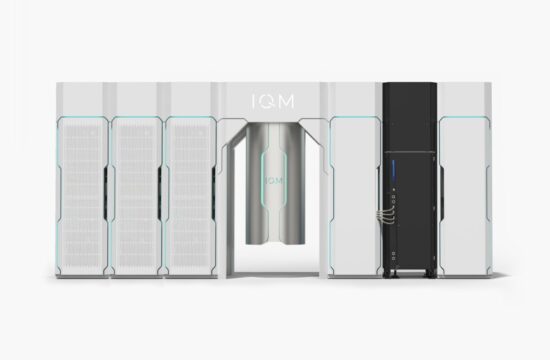
Above: An IQM quantum computer. Courtesy IQM.
This quantum computing weekly round-up shows a field that finally started putting numbers and hardware where the hype used to live. Logical qubits picked up a real scorecard, Europe flipped the switch on multiple production systems, and Bitcoin developers quietly began the long migration to quantum resistance. If your notes still say “more qubits equals progress,” this week just made that shorthand obsolete.
Logical Qubits Finally Get a Scorecard
Alice & Bob grew tired of fuzzy claims and published a five-criteria framework that actually lets investors and researchers compare logical qubit demonstrations across modalities. The framework demands breakeven lifetimes, scalable code families, enough error-correction cycles, performance without post-selection, and utility-relevant runtimes measured in hours or days. It is the first serious attempt to turn “we have a logical qubit” into something falsifiable.
The same week Alice & Bob also launched the Helium multi-cat-qubit platform, an 18-qubit superconducting system built specifically for third-party error-correction experiments. The architecture biases noise toward phase flips, pushes bit-flip times past one hour, and slashes the physical overhead needed for a logical qubit. Researchers can now book time on a real device instead of arguing about simulations.
Europe Fires Up New Quantum Hardware
Pasqal inaugurated Italy’s first neutral-atom quantum computer at CINECA in Bologna. The 140-qubit Orion system, named SOL, joins the Leonardo pre-exascale supercomputer and becomes Europe’s third Pasqal deployment. Hybrid workflows via QRMI and support for CUDA-Q and Qiskit are already in place. This is the Pasqal Italy launch that the European quantum community has been waiting for.
IQM followed with its own on-premises superconducting machine at the same supercomputing center. The 54-qubit NOX system gives Italy direct ownership of production quantum hardware integrated into one of the world’s fastest classical machines. Two different modalities now sit inside the same Italian facility — the IQM at Cineca deployment strengthens national compute sovereignty.
QuiX Quantum joined QuantumBW and Photonics BW to lock in Baden-Württemberg’s photonic supply chain and talent base. Quix Quantum partnerships strengthen the European photonic ecosystem. Xanadu, meanwhile, posted a new industry benchmark: 0.085 dB/facet edge-coupling loss in photonic chip packaging. The Xanadu packaging milestone was achieved with custom fiber work from Corning and improved singulation. Photonic scale just got a little less theoretical.
Testbeds Cross Modalities and Borders
Horizon Quantum chose Dublin for its second testbed, pairing an IonQ 256-qubit trapped-ion system with the company’s Triple Alpha software stack. Ireland gains a major hardware-agnostic development site while Horizon adds trapped-ion reach to its existing superconducting testbed in Singapore. The Horizon Dublin testbed makes dual-modality access a reality, not a slide-deck promise.
Distributed Architectures Make Quantum Systems Tougher
Nu Quantum simulations demonstrated that encoding quantum information across a network of smaller QPUs lets the system survive complete node failures. Distributed error correction proved up to six times more efficient than earlier approaches, and fault tolerance actually improves as more, smaller nodes are added. The Nu Quantum simulations turn the old “one giant fragile machine” model on its head and point toward elastic, cloud-like quantum infrastructure.
Bitcoin Starts Its Quantum-Proof Makeover
Bitcoin developers merged BIP-360, introducing the network’s first quantum-resistant address type. New “bc1r” outputs use post-quantum signatures while remaining backward-compatible through a soft fork. The move is the first concrete step in a multi-year migration plan that will eventually force holders of exposed legacy coins to move or lose access. The testnet is already live. This is the BIP-360 proposal that changes the long-term security conversation for the largest cryptocurrency.
‘Negative Day’ Risks Rewrite Cyber Playbooks
A Forbes Tech Council piece spelled out the “negative-day” threat: adversaries harvest encrypted data today because they know tomorrow’s quantum computers will decrypt it at leisure. The old zero-day model flips. Organizations that treat post-quantum migration as a future checkbox are already creating tomorrow’s breaches. Crypto agility and resilient PKI designs are no longer optional talking points. Read the full Forbes negative-day analysis if your threat model still lives in 2015.
Overhead and Costs Take a Beating
Predictive surrogates trained on small quantum datasets can now reproduce processor outputs with more than 99.97 percent less measurement overhead. The classical machine-learning twins work across variational algorithms and phase-of-matter detection on up to 42-qubit superconducting hardware and scale theoretically to thousands of qubits. The predictive surrogates breakthrough democratizes access to quantum hardware in a very real way.
Diraq laid out the math for silicon spin qubits reaching one dollar per qubit once systems hit millions of qubits on a single chip. Cryogenic and control costs stay flat while foundry economics drive chip prices down. That single number changes the capital-expenditure conversation from “how many qubits can we afford” to “how much useful computation can we buy.” See the Diraq cost vision for the full cost-curve analysis.
In a separate first, researchers uploaded an entire hepatitis D viral genome to an IBM Heron processor and let the quantum computer read and analyze real biological data. The viral genome upload proves quantum hardware can ingest and process genuine genomic information, not just toy problems.
Capital Flows and New Entrants Shake Things Up
Quantum Space announced it will go public through a merger with Inflection Point Acquisition Corp. VI, creating a pure-play national-security space company valued around $1.2 billion post-deal. The proceeds target production of maneuverable Ranger spacecraft that could carry quantum payloads or support quantum-secure communications in orbit. The Quantum Space SPAC deal brings serious capital and defense focus into the quantum-adjacent space sector.
Bottom Line
This week proved that quantum progress isn’t just about more qubits anymore — it’s about verifiable claims, shippable systems, and getting ahead of the threats that could rewrite entire industries.
—
See the full week of articles in the Weekly Archives Pages and the Weekly Round-Ups found at The Qubit Report.
Related Articles
Quantum Computing Weekly Round-Up: Week Ending September 19, 2026
Anderon, an IBM company, finalized a $1 billion CHIPS award to scale a U.S. 300 mm quantum wafer foundry, while the Department of Energy opened
The Qubit Report: September 17, 2026
Anderon finalized a $1 billion CHIPS award for its Albany 300-millimeter quantum foundry as IBM stacked another $1 billion behind the same line. The same
IQM to Deliver First South America Quantum Computer to Eldorado
IQM signed a purchase agreement on to put an IQM Spark at Brazil’s Eldorado Research Institute in Campinas in the first quarter of 2027. The